3 Million
video 2k, colour sound
Vietnamese with English subtitles (30′ 10″)
2025
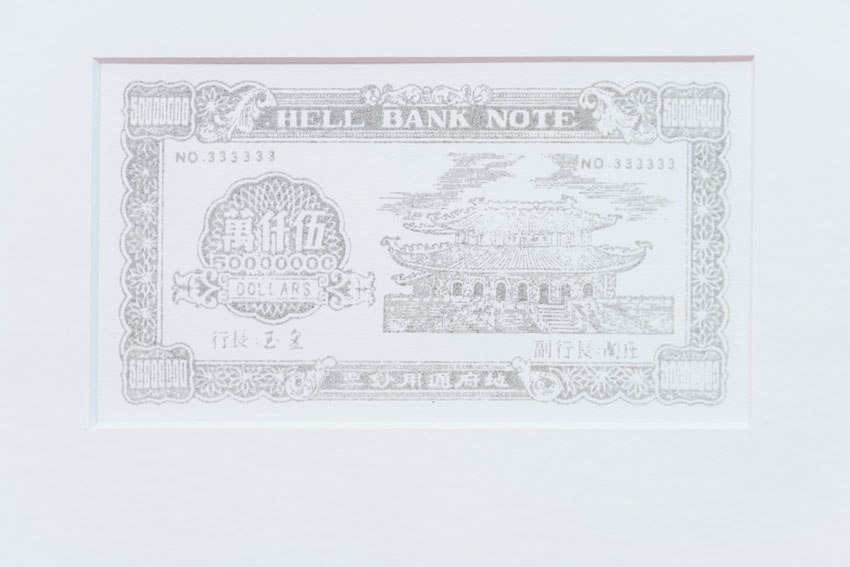
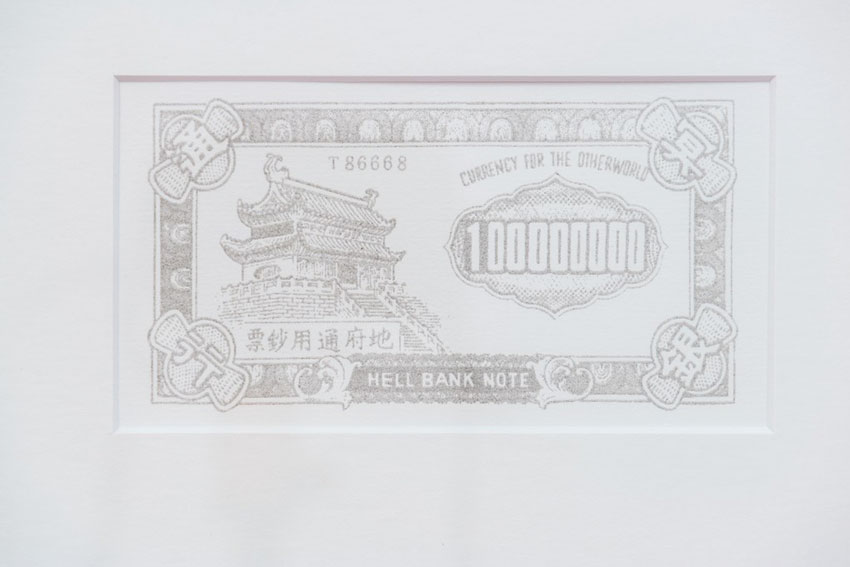
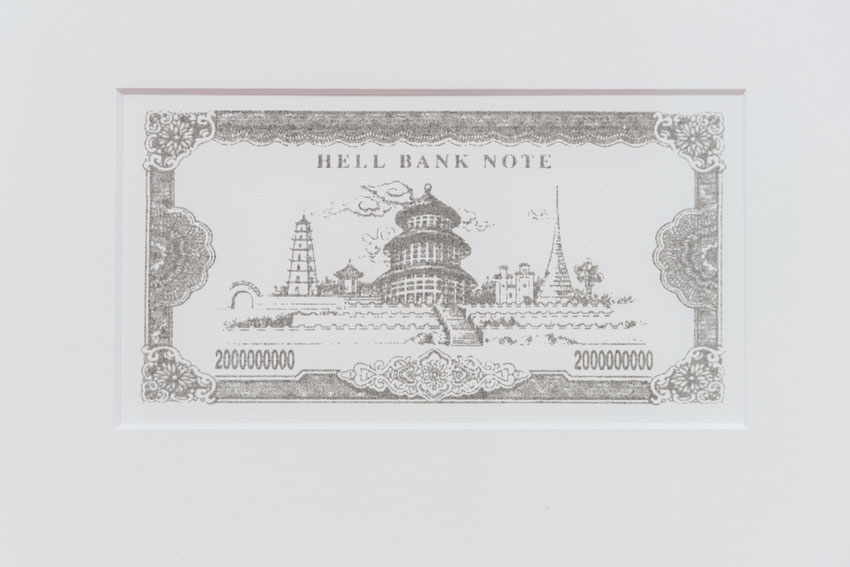
Currency for the Otherworld
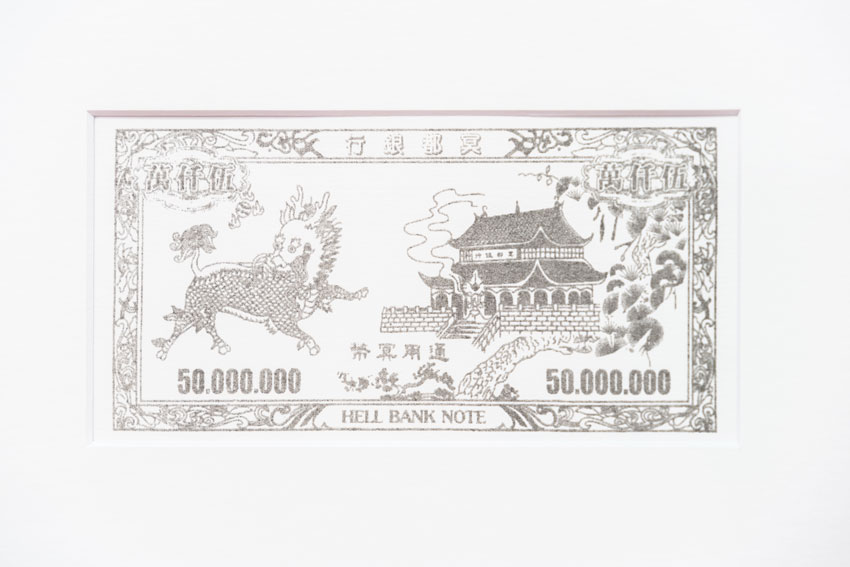
Series of 10 elements, screenprint, ashes and transparent ink on paper
50 x 35 cm
2025
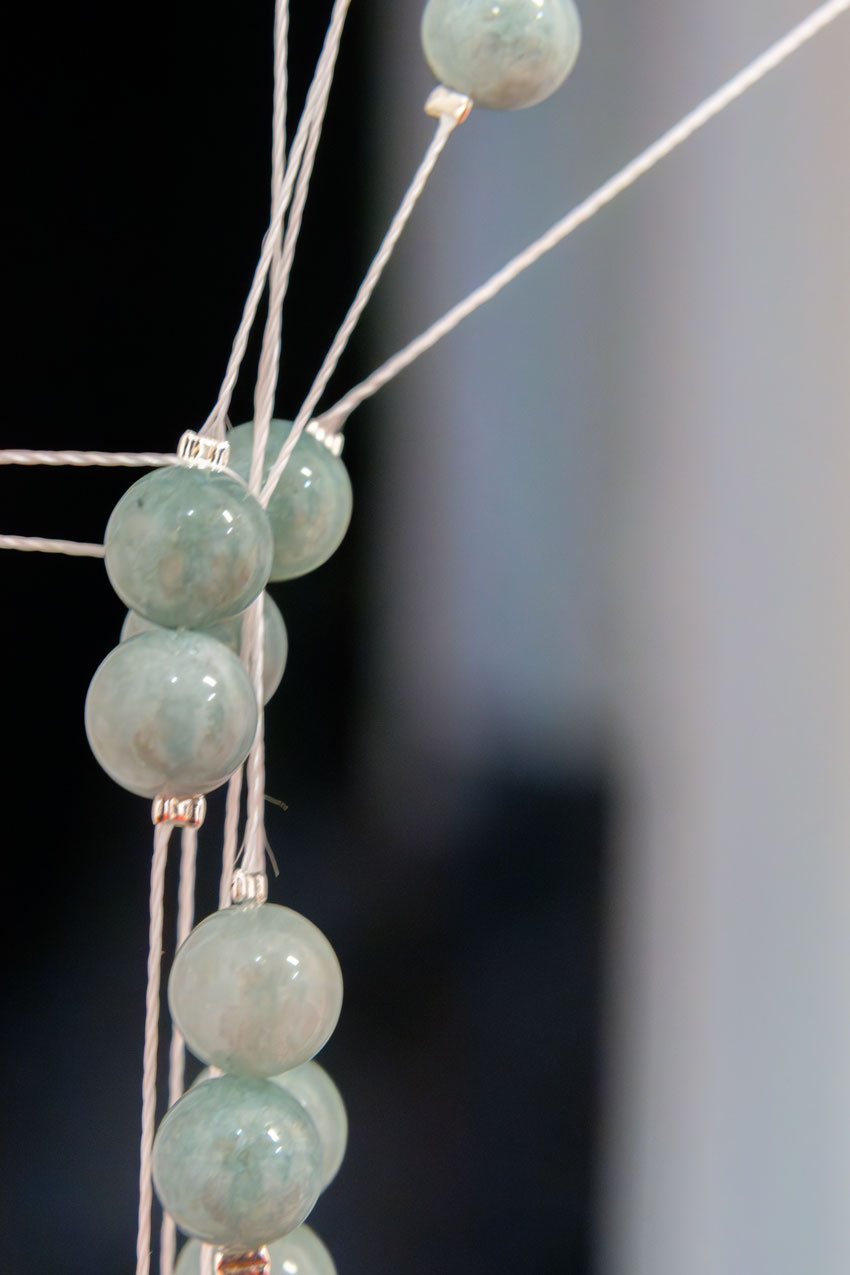
Miao Yin
Installation, curtain made of jade beads
approximately 200 x 100 cm
2025
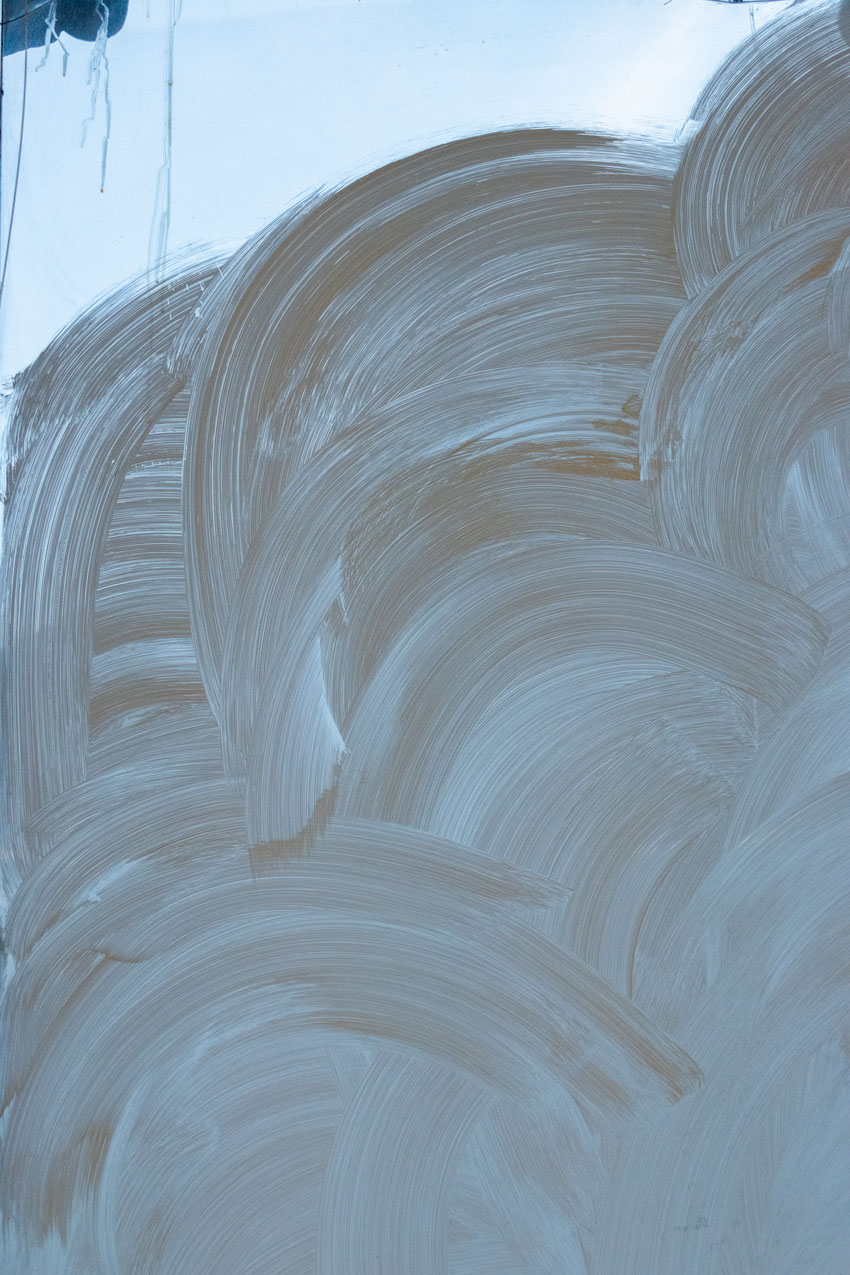
Nuvole (Clouds)
Site-specific intervention on windows
mixture of water and cleansing cream on glass
2025
-
Project developed within the framework of (In)Visible Traces: Artistic Memories of the Cold War, a European research and study program exploring the cultural, political, and personal legacies of the Cold War. Held in Romania in autumn 2024, the program focused on uncovering marginal sites and memories of the period. Artists and researchers were invited to develop individual investigations on the Cold War, its consequences, and the ways in which the conflict has shaped identities and geopolitical divisions.
video 2k, colour sound
Vietnamese with English subtitles (30′ 10″)
2025
Currency for the Otherworld
Series of 10 elements, screenprint, ashes and transparent ink on paper
50 x 35 cm
2025
Miao Yin
Installation, curtain made of jade beads
approximately 200 x 100 cm
2025
Nuvole (Clouds)
Site-specific intervention on windows
mixture of water and cleansing cream on glass
2025
-
Project developed within the framework of (In)Visible Traces: Artistic Memories of the Cold War, a European research and study program exploring the cultural, political, and personal legacies of the Cold War. Held in Romania in autumn 2024, the program focused on uncovering marginal sites and memories of the period. Artists and researchers were invited to develop individual investigations on the Cold War, its consequences, and the ways in which the conflict has shaped identities and geopolitical divisions.
EN
* The Joss Paper ritual is an ancient Chinese funerary practice, widely observed throughout East and Southeast Asia. It involves burning paper replicas of everyday objects — primarily banknotes, but also other material goods — as offerings to the deceased. Through fire, the paper transforms into a spiritual substance that, according to tradition, can reach the afterlife. These offerings are intended to ensure the well-being of the deceased, allowing them to access goods, services, or protection in the realm of the dead.
The research begins with a reflection on the Cold War and its legacy, shifting the focus to Southeast Asia and, in particular, Vietnam — the site of one of the longest and bloodiest conflicts of the twentieth century, which claimed the lives of three million Vietnamese.
The research begins with a reflection on the Cold War and its legacy, shifting the focus to Southeast Asia and, in particular, Vietnam — the site of one of the longest and bloodiest conflicts of the twentieth century, which claimed the lives of three million Vietnamese.
Fifty years after the end of the war, the artist traveled to Ho Chi Minh City, formerly Saigon and the capital of South Vietnam, where the conflict ended with the surrender of the American army and the beginning of a new era for the country, unified after more than a century of Western occupation.
From this experience emerged 3 Million, a video documenting a performative action in which three million dollars in Joss Paper are burned in a funeral furnace on the outskirts of Ho Chi Minh City — one dollar for each victim of the war. The act draws on an ancient Chinese ritual, still practiced across much of East Asia, and combines remembrance of the victims with a reflection on the historical and economic responsibilities of the West.
3 Million invites a rethinking of the Cold War from a non-Western perspective, highlighting how history has shaped identities, memories, and political geographies.
The work emphasizes how Asia — particularly Southeast Asia — continues to be a stage for geopolitical tensions, both old and new, between East and West.
IT
* Il rituale del Joss Paper è un’antica pratica funeraria di origine cinese, ampiamente diffusa in tutta l’Asia orientale e nel Sud-est asiatico. Consiste nel bruciare riproduzioni in carta di oggetti di uso quotidiano — soprattutto banconote, ma anche beni materiali — come offerte destinate ai defunti. Attraverso il fuoco, la carta si trasforma in una sostanza spirituale che, secondo la tradizione, può raggiungere l’aldilà. Queste offerte servono ad assicurare il benessere dei defunti, permettendo loro di disporre di beni, servizi o protezioni nel regno dei morti.
* Il rituale del Joss Paper è un’antica pratica funeraria di origine cinese, ampiamente diffusa in tutta l’Asia orientale e nel Sud-est asiatico. Consiste nel bruciare riproduzioni in carta di oggetti di uso quotidiano — soprattutto banconote, ma anche beni materiali — come offerte destinate ai defunti. Attraverso il fuoco, la carta si trasforma in una sostanza spirituale che, secondo la tradizione, può raggiungere l’aldilà. Queste offerte servono ad assicurare il benessere dei defunti, permettendo loro di disporre di beni, servizi o protezioni nel regno dei morti.
La ricerca parte da una riflessione sulla Guerra Fredda e sulla sua eredità, spostando l’attenzione verso il Sud-est asiatico e, in particolare, sul Vietnam — teatro di uno dei conflitti più lunghi e sanguinosi del secondo Novecento, che costò la vita a tre milioni di vietnamiti.
A cinquant’anni esatti dalla fine della guerra, l’artista si è recato a Ho Chi Minh City, l’ex Saigon e capitale del Vietnam del Sud, là dove il conflitto si chiuse con la resa dell’esercito americano e l’inizio di una nuova era per il Paese, unificato dopo oltre un secolo di occupazione occidentale.
Da quell’esperienza nasce 3 Million, un video che documenta un’azione performativa in cui tre milioni di dollari in Joss Paper vengono bruciati in un forno funerario alla periferia di Ho Chi Minh City: un dollaro per ogni vittima della guerra. Il gesto si ispira a un antico rituale cinese, ancora vivo in gran parte dell’Asia orientale, e unisce il ricordo delle vittime a una riflessione sulle responsabilità storiche ed economiche dell’Occidente.
3 Million invita a ripensare la Guerra Fredda da un punto di vista non occidentocentrico, evidenziando come la storia abbia plasmato identità, memorie e geografie politiche.
Il percorso mette in luce come l’Asia — e in particolare il Sud-est asiatico — continui ancora oggi a essere teatro di tensioni geopolitiche, vecchie e nuove, tra Oriente e Occidente.

Ryts Monet, 3 Million, photographic documentation of the performance, Ho Chi Minh City, Vietnam, 2025
Ryts Monet, 3 Million, video 2k, colour sound, Vietnamese with English subtitles (30′ 10″), 2025

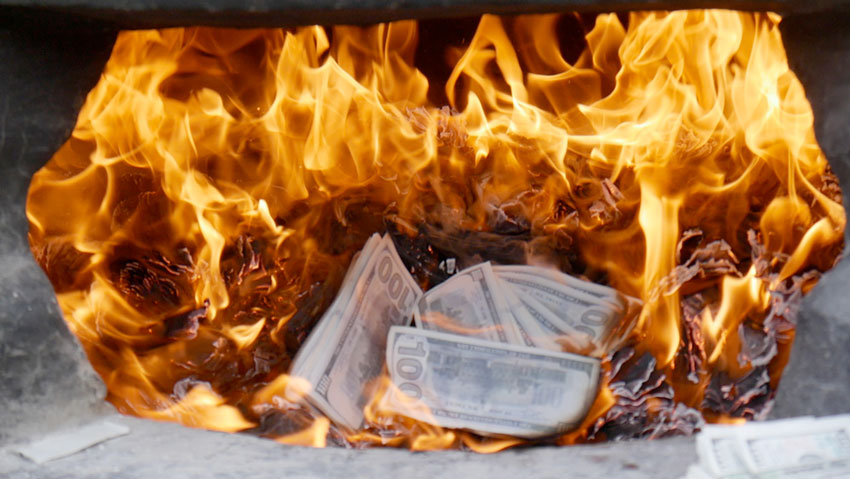
Ryts Monet, 3 Million, video stills, 2025
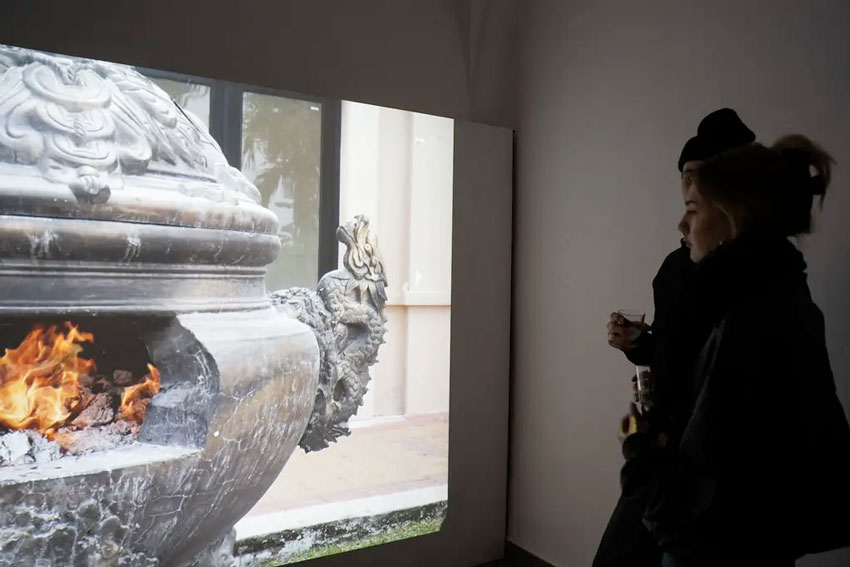

Ryts Monet, 3 Million, installation view at 3 Million, solo show at DAS WEISSE HAUS, Vienna, 2025
Photo credits: Esel.at
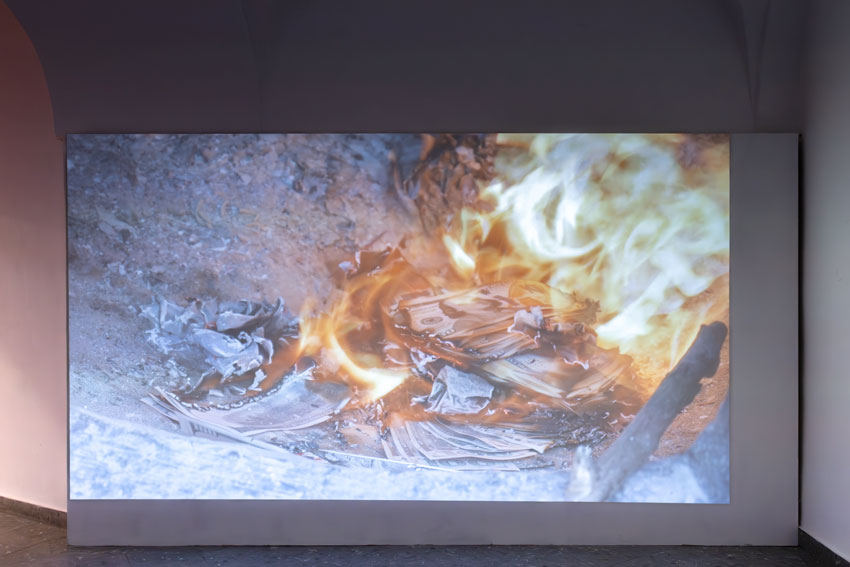
EN
On the occasion of the fiftieth anniversary of the end of the Vietnam War, 3 Million became the centerpiece — and title — of a solo exhibition at DAS WEISSE HAUS in Vienna.
On the occasion of the fiftieth anniversary of the end of the Vietnam War, 3 Million became the centerpiece — and title — of a solo exhibition at DAS WEISSE HAUS in Vienna.
A portion of the ashes produced by burning the three million dollars in Joss Paper was used to create the screenprint series Currency for the Otherworld. The series explores the iconography of votive banknotes: the prints reproduce the reverse sides of the traditional Joss Paper, showing views of divine residences and the so-called “banks of the afterlife” — places where, according to tradition, souls receive the money burned by the living.
The banknotes, often printed in very high denominations, almost always bear the inscription “Hell Bank Note.” The use of the term “Hell” dates back to the colonial period, when Christian missionaries in East Asia adopted it as an approximate translation for the afterlife, despite having no connection with the Christian concept of hell.
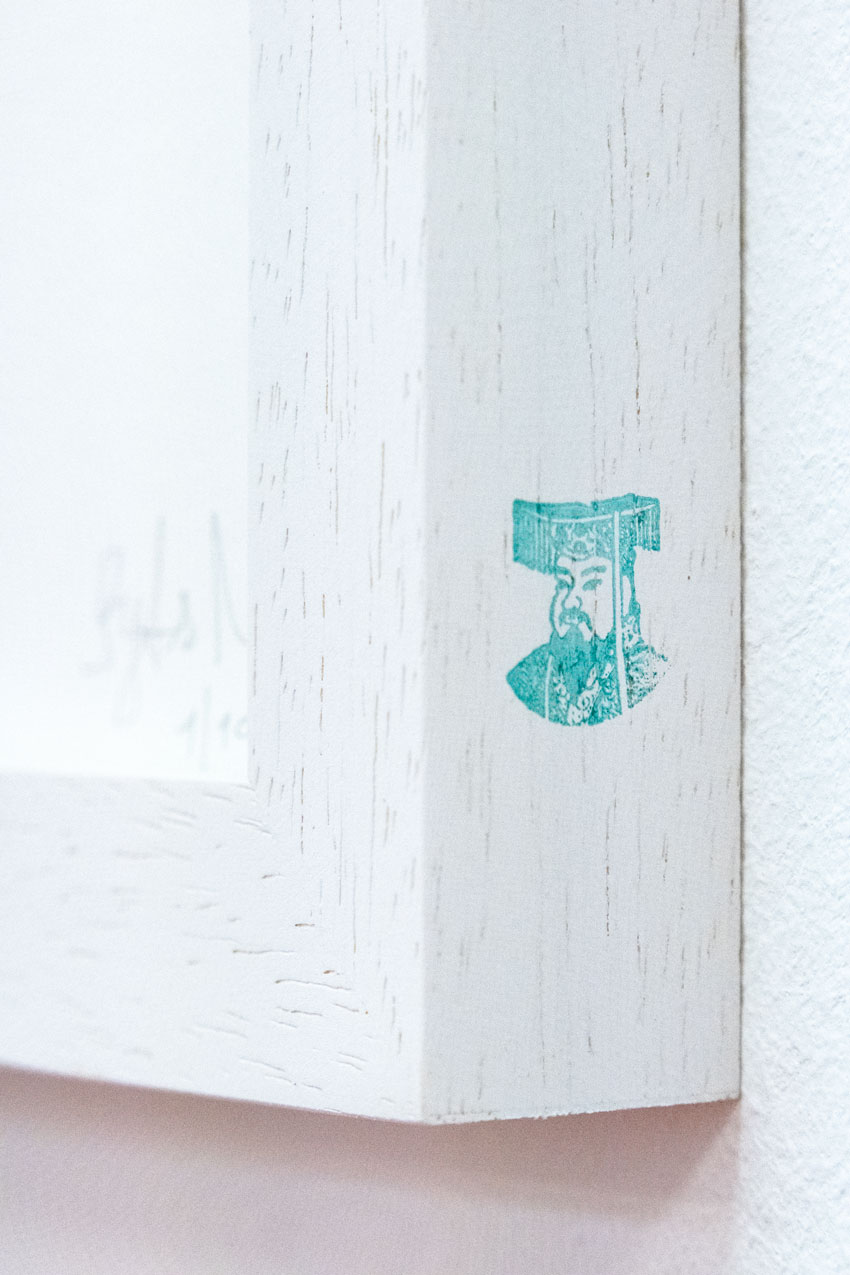
On the threshold between the first room, dedicated to the video, and the second gallery, is Miao Yin, an installation made of jade beads, referencing the Jade Emperor, the supreme celestial deity of the Taoist pantheon, traditionally depicted on the front of Hell Bank Notes.
Finally, the three windows of the circular space at DAS WEISSE HAUS, overlooking a busy intersection in Vienna, have been covered with a semi-opaque white film designed to soften the view of the urban landscape and suspend visual contact with the city, while still allowing natural light to filter through: Nuvole (Clouds)
IT
In occasione del cinquantenario della conclusione della guerra del Vietnam, 3 Million è diventata il fulcro — e il titolo — di una mostra personale presso DAS WEISSE HAUS a Vienna.
In occasione del cinquantenario della conclusione della guerra del Vietnam, 3 Million è diventata il fulcro — e il titolo — di una mostra personale presso DAS WEISSE HAUS a Vienna.
Una parte della cenere prodotta dalla combustione dei tre milioni di dollari in Joss Paper è stata utilizzata per realizzare la serie di serigrafie Currency for the Otherworld. La serie approfondisce l’iconografia delle banconote votive: le serigrafie riproducono i retro delle Joss Paper tradizionali, dove compaiono vedute di residenze divine e delle cosiddette “banche dell’aldilà” — luoghi nei quali, secondo la tradizione, le anime ricevono il denaro bruciato dai vivi.
Le banconote, spesso stampate in altissime denominazioni, riportano quasi sempre l’iscrizione “Hell Bank Note”. L’uso del termine “Hell” risale al periodo coloniale, quando i missionari cristiani attivi in Asia orientale lo adottarono come traduzione approssimativa dell’aldilà, pur non avendo alcun legame con il concetto cristiano di inferno.
Sulla soglia che separa la prima stanza, dedicata al video, dalla seconda sala si trova Miao Yin, un’installazione composta da perle di giada, un rimando all’Imperatore di Giada, suprema divinità celeste del pantheon taoista, tradizionalmente raffigurata sul fronte delle Hell Bank Notes.
Infine, le tre finestre dello spazio circolare di DAS WEISSE HAUS, affacciate su un incrocio di Vienna, sono state rivestite con una pellicola bianca semi-opaca concepita per attenuare la vista del paesaggio urbano e sospendere ogni contatto visivo con la città, pur consentendo il passaggio della luce naturale: Nuvole.
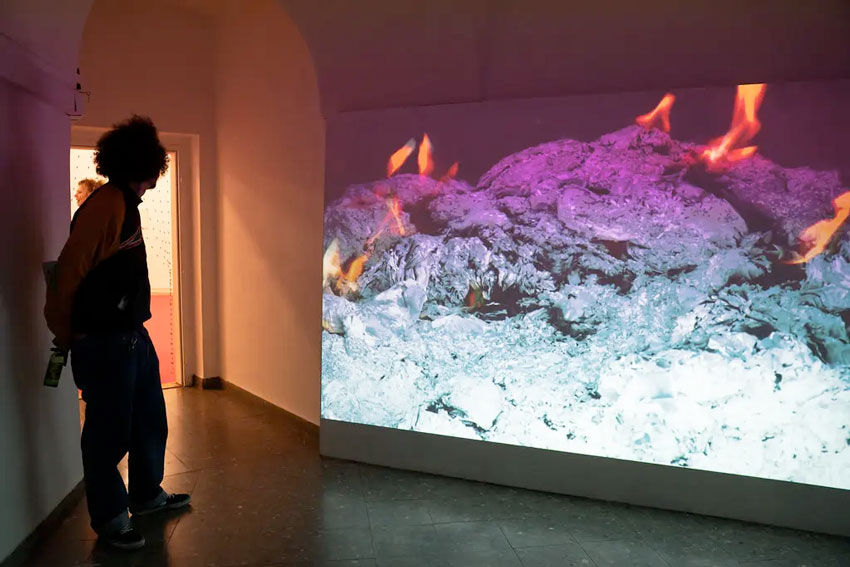
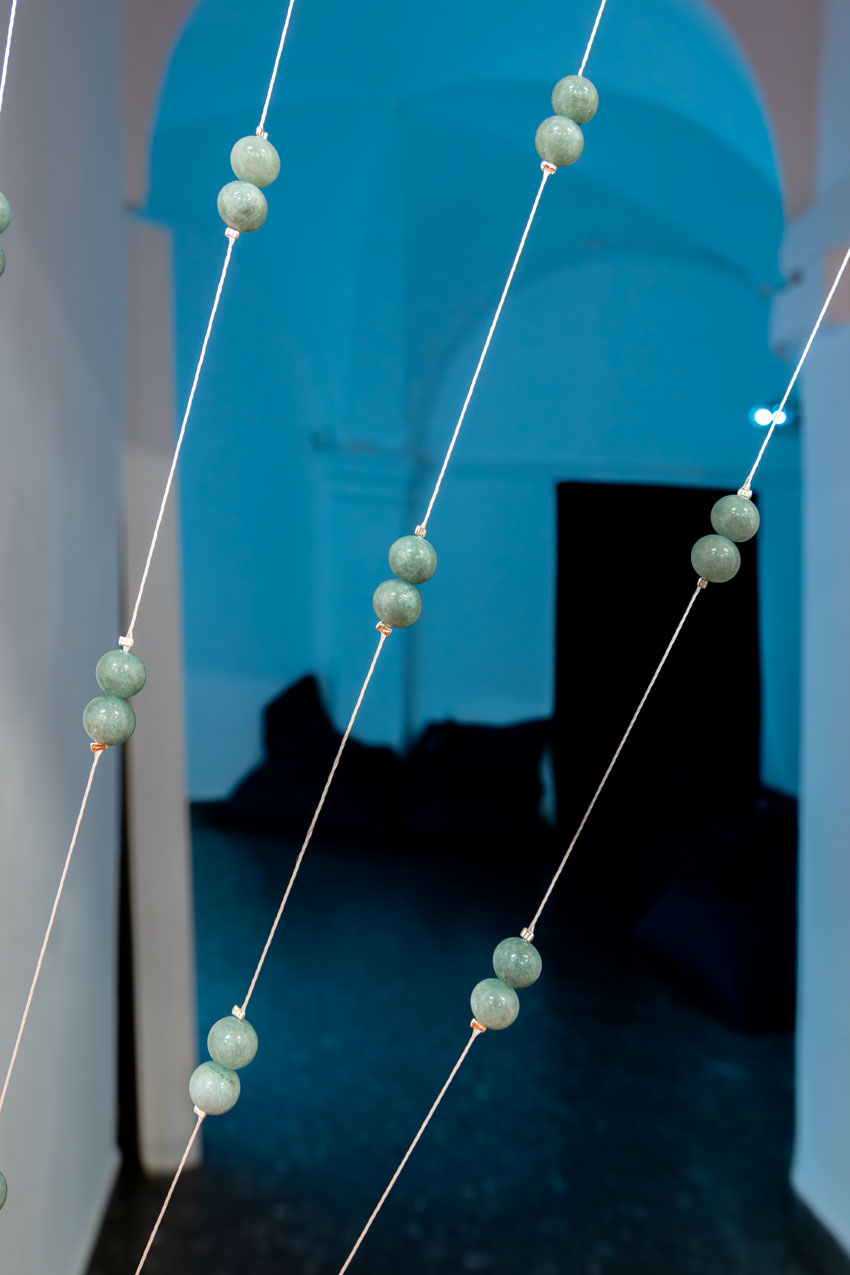
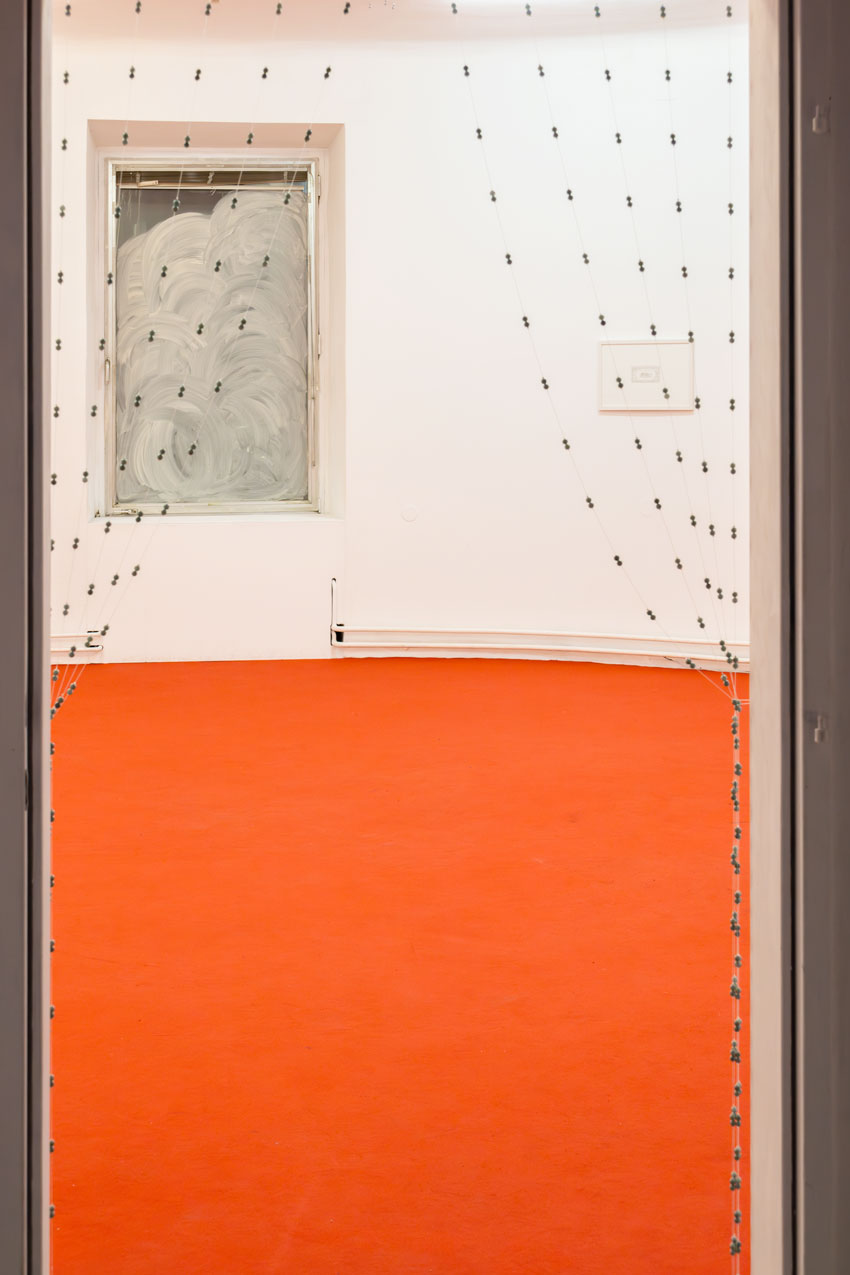

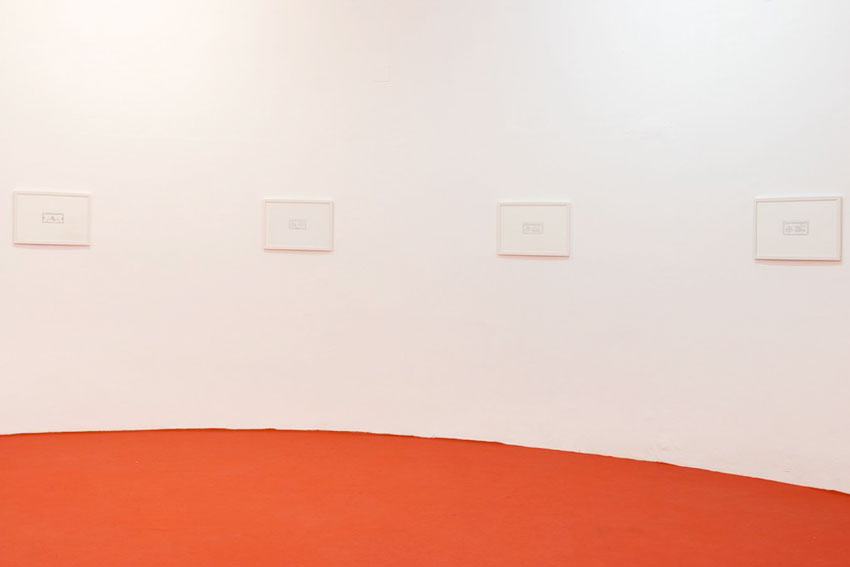
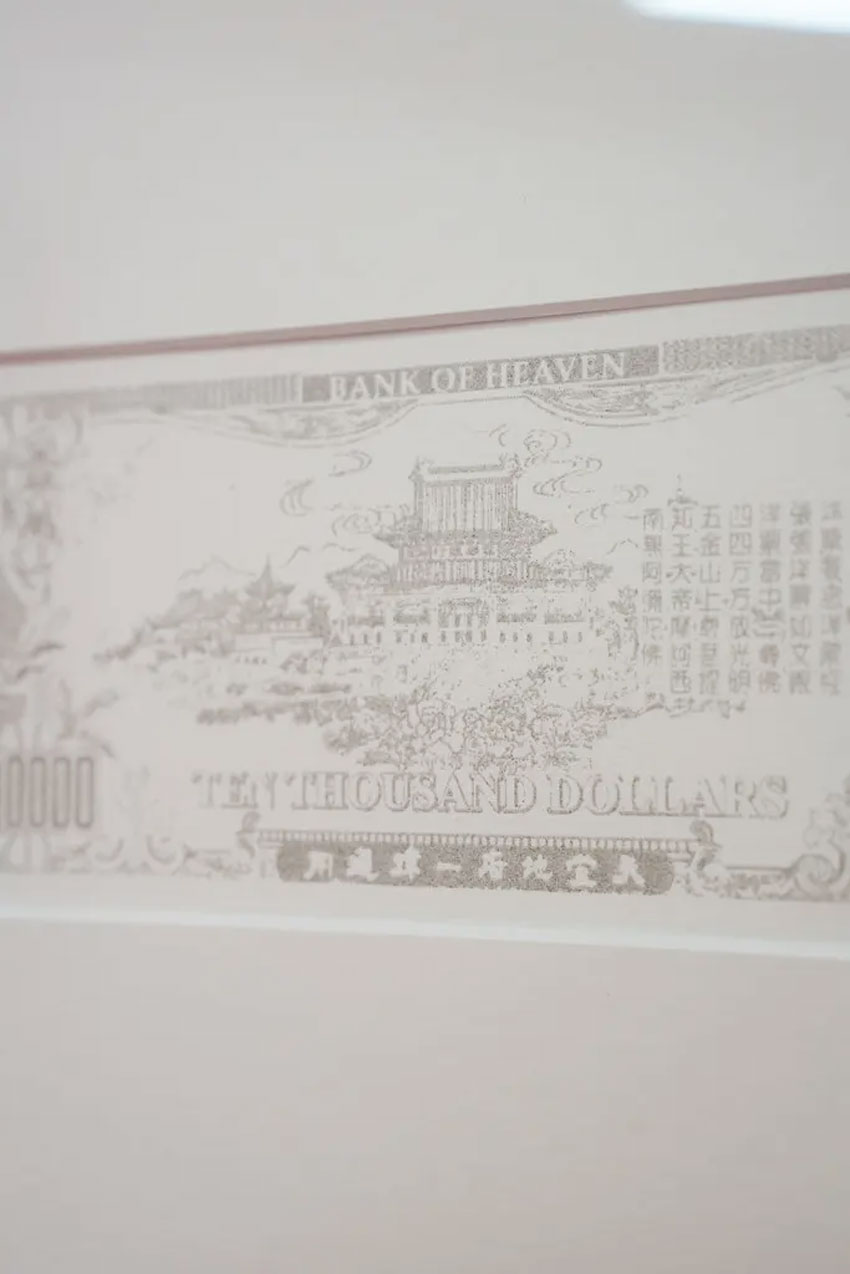

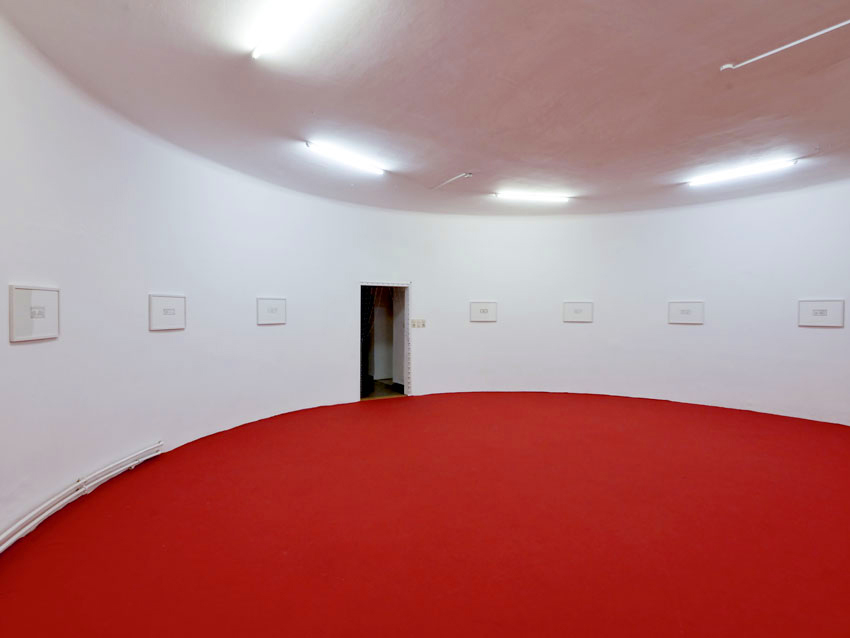
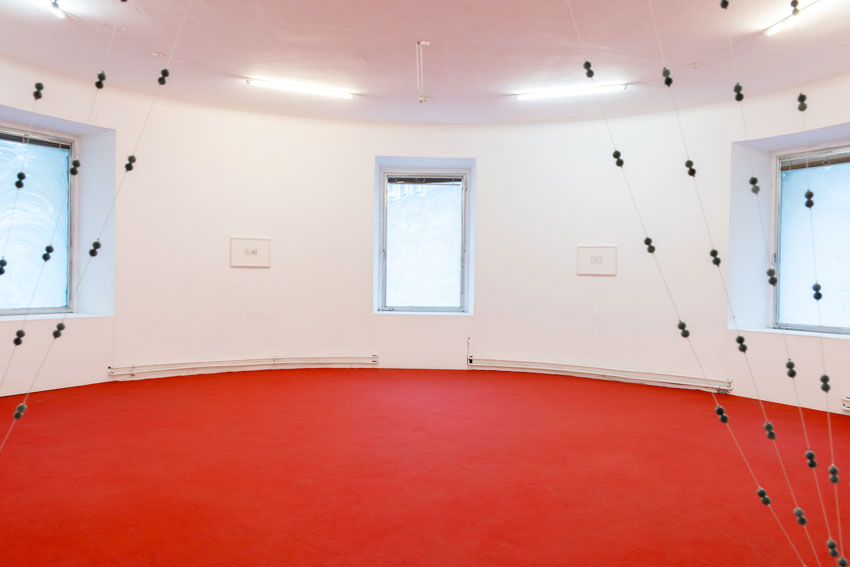
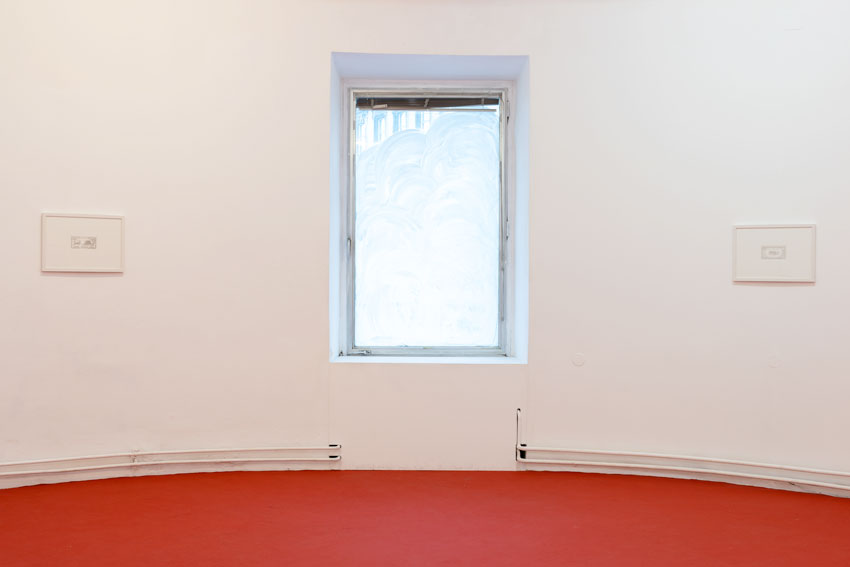
Ryts Monet, exhibition view at 3 Million, solo show at DAS WEISSE HAUS, Vienna, 2025
Photo credits: Lea-Maraike Sambale